If police stop you
A traffic stop in the US is a routine event — millions happen every day — but it can be unsettling if it's your first time, especially in a foreign country. This page walks through exactly what to do, in order, so nothing about the stop escalates because of how you handled it.
This is a safety and procedure guide, not legal advice.
If you need legal advice about your specific situation, contact a licensed US attorney or your country's nearest consulate. For life-threatening emergencies, call 911.
Before the stop: recognizing that you're being pulled over
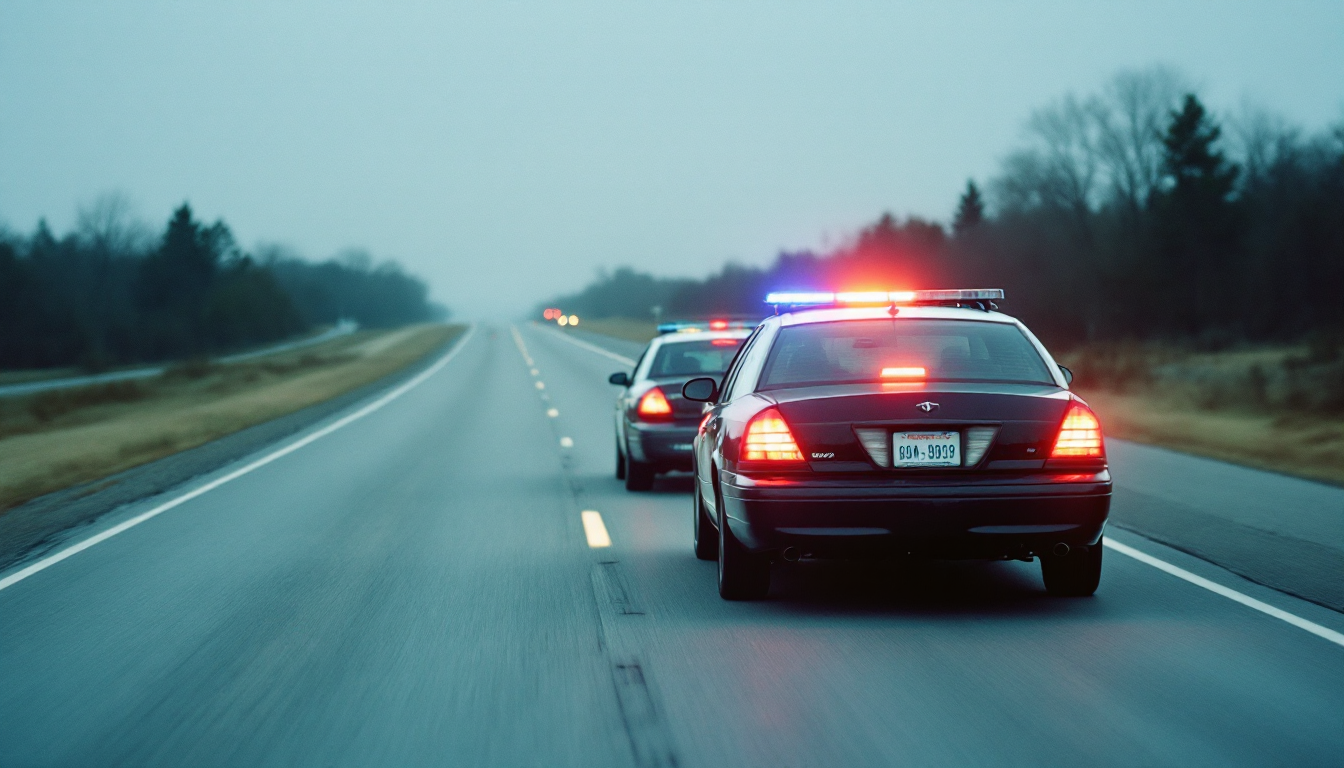
US police vehicles use red and blue flashing lights and usually a short siren burst to signal you to pull over. Some unmarked vehicles will use grille-mounted lights. If you are on an Interstate or multi-lane highway and the lights appear behind you, they are for you unless the cruiser passes.
Every state DMV handbook covers the traffic-stop procedure. These instructions are consistent across California, Texas, Florida, New York, and most other states.[2][3]
The six steps, in order
1. Pull over as far right as safely possible
Turn on your right turn signal to acknowledge the officer, slow down, and move to the right shoulder. On narrow roads without a shoulder, the officer expects you to find the nearest safe spot — a parking lot, a side street, or a wide verge. Do not stop in a travel lane.
If you can't immediately stop safely (for example, on a bridge or in a tunnel), keep going at reduced speed with the signal on until the first safe spot. Officers understand this and will follow you.
2. Turn off the engine, put hands on the wheel
Shift into Park, turn off the engine, turn on your hazard lights, and put both hands on the top of the steering wheel in clear view. At night, turn on the interior dome light.
3. Roll the driver's window fully down
Fully open the window. Do not step out unless instructed. The officer may approach from the driver side or the passenger side — either is routine. In most states the officer will introduce themselves and state the reason for the stop.
4. Wait — do not reach for anything yet
Do not reach for your wallet, the glove box, or your phone before the officer asks. When the officer requests documents, announce the reach before you do it: for example, "My license is in my wallet in my jacket pocket, I'm going to reach for it now." This is the single most important habit of a calm stop.
5. Provide documents
The officer will typically ask for three items:
- Driver license — US license, or your foreign license + IDP.
- Vehicle registration — in a rental, this is in the glove box.
- Proof of insurance — rental company's insurance card, or your own. See auto insurance.
If documents are in the glove box, announce it first and move slowly. Hand papers out through the window rather than holding them inside the car.
6. Answer identification, stay calm for the rest
You are generally required to identify yourself. You can politely decline to answer investigatory questions — the roadside is not the place to argue the case. If you receive a citation (ticket), signing it is not an admission of guilt; it's a promise to appear in court or pay the fine. You can contest it later.
Special situations
If you don't speak fluent English
Tell the officer calmly: "I don't speak English well." Many departments have access to a phone translation line. Speak slowly, use simple words, and show documents — a passport plus an International Driving Permit with your native- language translation is very helpful here.[7]
If the officer asks to search the car
In most cases an officer needs your consent, probable cause, or a warrant to search a vehicle. If asked "Do you mind if I take a look?", you may decline by saying "I don't consent to a search." This is your Fourth-Amendment right, and declining a consensual search does not itself make you a suspect. The officer may still search if they have probable cause independent of your consent; that is a legal question a lawyer, not the roadside, answers.
If you are asked to step out of the vehicle
The officer may legally order you out of the vehicle during a lawful stop (Pennsylvania v. Mimms, 434 U.S. 106). Comply calmly. Keep your hands visible.
If you believe the stop is wrongful
The roadside is not the place to argue. Comply, take the citation, write down the officer's name, badge number, and agency, and get the details of the stop in writing afterward. You can contest the ticket in court, file a complaint with the department's internal affairs office, or contact an attorney.
"Move Over" and traffic stops you pass
If you are driving and you see a police, ambulance, or tow vehicle stopped on the shoulder with lights flashing, all 50 states have a Move Overlaw: change lanes away from the stopped emergency vehicle, or if you can't, slow down significantly.[1]
After the stop
If you received a citation, it will list the court and the date by which you must pay or contest it. Many violations can be paid online. Non-residents leaving the US before the court date should handle the citation immediately — unpaid fines can be reported to collection and may affect future US visas.
If you were in a rental, report the citation to the rental company right away — some companies pay tickets on your behalf and bill you plus a service fee, and not knowing this often makes the charge larger later.
Before you drive
- Keep your driver's license (or foreign license + IDP) on you, not in a bag in the trunk.
- Know where the registration and insurance card are in your rental — ask when you pick it up.
- Have your insurance and emergency numbers saved in your phone.
- If in doubt about a situation on the road, pull into a gas station or well-lit public place before handling it.
Related guides
- Licenses & the International Driving Permit
- Auto insurance in the US
- US driving basics
- Road signs (MUTCD)
Sources
- [1]NHTSA — Move Over, It's the Law — NHTSA · accessed 2026-04-23
- [2]California DMV — Driver Handbook — California DMV · accessed 2026-04-23
- [3]Texas DPS — Driver Handbook — Texas DPS · accessed 2026-04-23
- [4]Florida FLHSMV — Driver License Handbook — Florida HSMV · accessed 2026-04-23
- [5]New York DMV — Driver’s Manual — NY DMV · accessed 2026-04-23
- [6]US State Department — International Travel: United States — US State Department · accessed 2026-04-23
- [7]USAGov — Driving in the U.S. if you are not a citizen — USAGov · accessed 2026-04-23